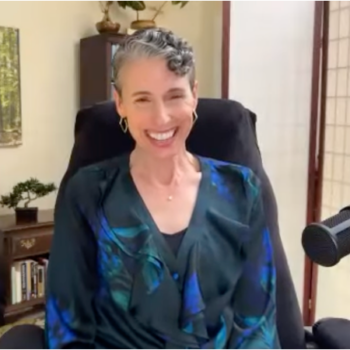
In July, 2024 I participated in the talk Tales of the C(omorbid)ity: Exploring the Dynamic Features of Co-Occurring OCD and PTSD at the IOCDF Conference in Orlando, along with Caitlin Pinciotti, PhD; Nathaniel Van Kirk, PhD; and Lauren Wadsworth, PhD. You can watch my pre-recorded portion of the presentation below, which this blog post explains.
OCD and PTSD can interact dynamically
To give you context for my portion of the presentation, here is the abstract for our talk:
“Up to 82% of individuals with OCD have experienced trauma, and 25% of individuals with OCD will experience PTSD at some point in their lifetime. These experiences are associated with more severe and complex long-term trajectories of OCD symptoms. This increased severity and chronicity in co-occurring OCD and trauma/PTSD has been theorized to be a result of dynamic comorbidity wherein the content and/or function of OCD is intertwined with trauma/PTSD (e.g., compulsions help cope with trauma symptoms).
Unfortunately, very little has been understood about dynamic comorbidity – until now. This talk will define dynamic comorbidity of OCD and trauma/PTSD, share emerging research about its prevalence and features, and offer lived experience perspectives.”
I’m one of the 25% of individuals who have both OCD and PTSD, so my portions of the talk cover my lived experience with the dynamic comorbidity of these disorders, also known as post-traumatic OCD (PTOCD). Part 1 of my talk (6 minutes) covers:
- The events leading to my developing PTSD in 2020.
- How my OCD jumped in shortly thereafter to “protect me” from being traumatized again through a set of compulsions that had a new flavor from my past OCD.
Because OCD was triggered as a result of PTSD, my experience is a classic example of post-traumatic OCD. Further, like many people with PTOCD, I attempted many times to use ERP skills on their own to stop doing these compulsions but was repeatedly unsuccessful because of the nature of the intertwined disorders.
Evidence-based treatment for PTOCD
In part 2 of the talk below (12 minutes), I briefly review the evidenced-based treatment I did for my PTOCD, which included combining prolonged exposure (PE) and cognitive processing therapy (CPT) for PTSD with exposure and response prevention therapy (ERP) for OCD.
After spending many months working with my therapist, which I discuss in more detail in a previous blog that Dr. Caitlin Pinciotti and I wrote about PTOCD, I became much, much better.
However, progress in therapy frequently isn’t linear. Due to the often complex and dynamic nature of intertwined PTSD and OCD, I had some remaining PTOCD symptoms that were occurring outside of my awareness. And they unfortunately made me a sitting duck…
The intertwined disorders are complex … and subtle
I actually recorded a different presentation for the IOCDF conference a month prior to the conference, when I realized that due to some health issues I wasn’t going to be able to attend in person. But several weeks after sending my recordings to Caitlin, I was the victim of a scam.
The traumatizing experience provided several priceless silver linings for my recovery, however, which is why I recorded new presentations to share my aha! moments, hoping they could give you insights into your own PTOCD.
The first silver lining is that the experience enabled me to gain insights I previously didn’t have about how my PTOCD had been operating under the radar in my day-to-day life. In the video, I map the interactions that were occurring between the two disorders prior to the scam to give you an example of what PTOCD symptoms can look like.
I also illustrate how these symptoms can be complex and subtle. And as a result, sometimes we don’t have insight into the fact that some of our beliefs and behaviors are being driven by the intertwined disorders! We think instead they reflect an unvarnished, realistic view of “the way life is.”
A new response to trauma
The second silver lining is that my aha! moment into my PTOCD’s role into what had happened allowed me to respond in a new and different way to the traumatic event.
In the aftermath of that scam call, I realized I was at a crossroads. I had a new and painfully clear understanding of how following PTOCD’s twisted logic had led me down the path of being scammed in the first place. I also realized that if I continued to react to trauma following PTOCD’s guidance rather than responding with the tools I’d been given in therapy, I was opening the door to more misery.
Motivated by the possibility that I could choose a different path that might offer a more empowering future, I jumped headfirst into self-compassion, ERP and advocacy for others, and creating and using a different set of beliefs, all of which I discuss in the video. And for the first time since I developed PTSD in 2020, I’m experiencing post-traumatic growth, which is when the experience of trauma makes us stronger (see more about this below).
Post-traumatic growth is possible
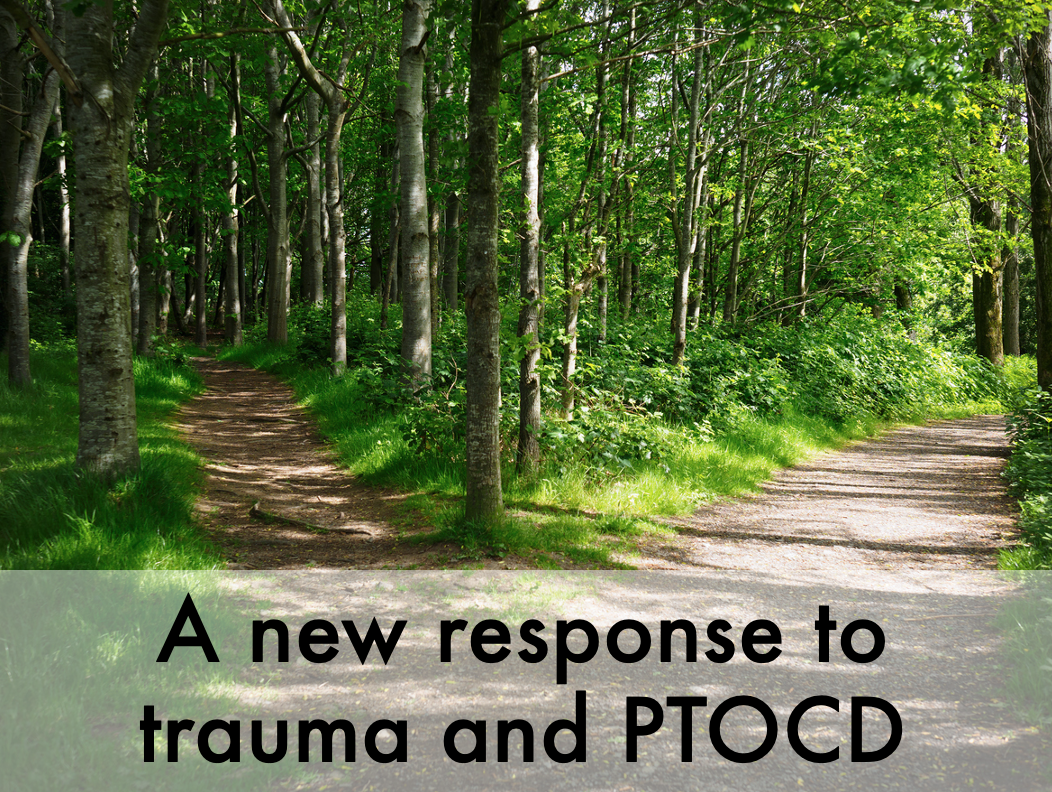 Continuing to maintain the post-traumatic growth from this experience will take work: choosing self-compassionate, imperfect, exposure-based actions based on my new, more helpful set of beliefs on a daily basis.
Notice that I stuck “imperfect” in there, because recovery is still a process where, as I said in Is Fred in the Refrigerator? Taming OCD and Reclaiming My Life, we’re “sometimes stumbling, sometimes falling, but always, always getting back up and fighting for [our] freedom again.”
The notion that post-traumatic growth is available to us, even when…
- PTOCD is complex,
- recovery often isn’t linear,
- challenging things keep happening, and/or
- the recovery process has taken a lot of time
…well, now that’s a big aha! moment. One that gives me incredible hope for all of us with PTOCD, because it shows the possibilities open to us as we work to reclaim our lives.
Learn more about post-traumatic OCD and its treatment
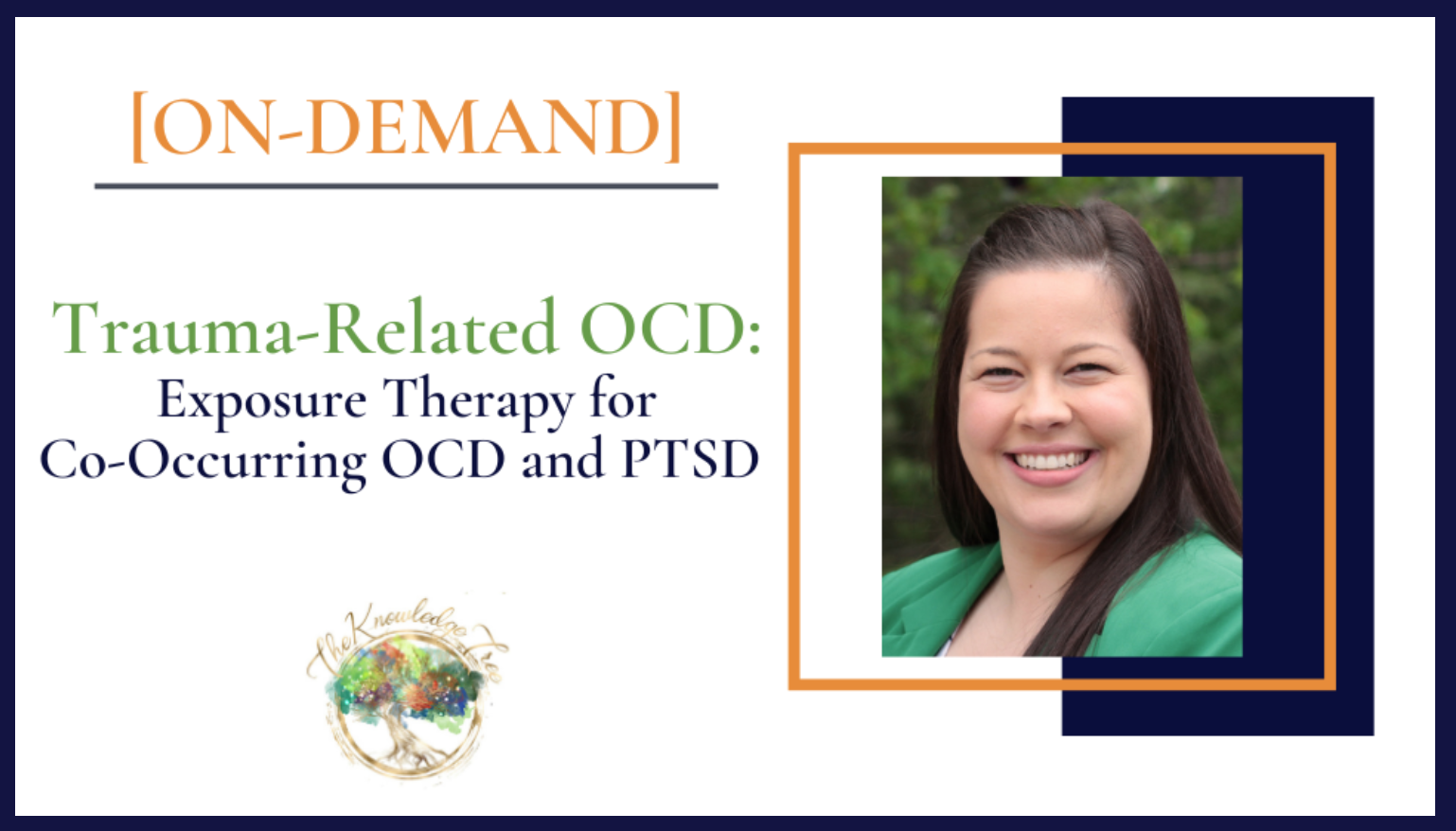
To learn more about the dynamic combination of OCD and PTSD and how it’s treated, see “Post-traumatic OCD: When OCD & PTSD Intertwine.” If you’re a therapist and would like to learn more about how to treat co-occurring OCD and PTSD, you can take Dr. Pinciotti’s on-demand CEU course on The Knowledge Tree: Trauma-Related OCD: Exposure Therapy for Co-Occurring OCD and PTSD – 3 CEUs.
Learn more about taming OCD and reclaiming your life
To learn more about how I developed the new Rule #1 for my OCD recovery that I discuss in the second video, see chapter 19 of Is Fred in the Refrigerator? Taming OCD and Reclaiming My Life. Click here to purchase your copy.